Smart garden 2026: robot mowers without wires and smart watering, what's worth it
Robot lawnmowers no longer need a wire around the lawn, and smart watering promises to cut water bills. But independent tests found only two of eight wire-free mowers good enough, and hedgehogs pay the price of night mowing. Here is what to buy and how to use it.
In short
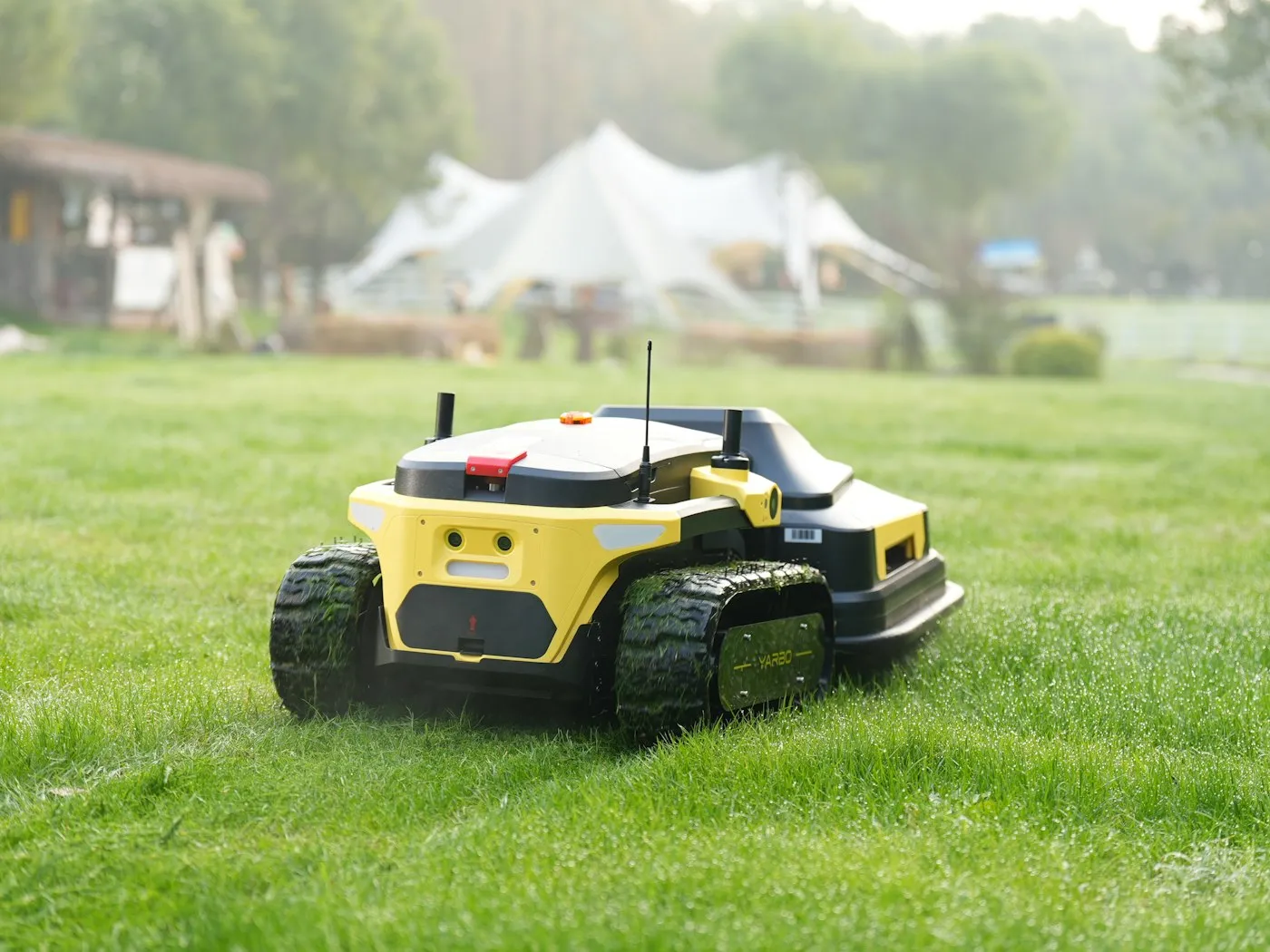
- New robot mowers find their way by satellite positioning (RTK), cameras or laser scanners instead of a boundary wire. Mainstream models cost from about €900 to €2,500.
- In Stiftung Warentest's and Konsument's 2026 test, only two of eight wire-free mowers were rated good overall; the Ecovacs GOAT O800 RTK came top.
- Hedgehogs are the big problem: many models failed to detect a hedgehog dummy reliably, and researchers found that every mower tested had to touch a hedgehog before stopping.
- Cologne, Freiburg and other German cities, as well as the Belgian region of Wallonia, now ban robot mowers at night. Mow only in daylight, wherever you live.
- Smart watering pays off: the US Environmental Protection Agency says a weather-based controller can save a household up to about 57,000 litres of water a year.
The robot lawnmower has changed more in the last two years than in the previous twenty. The boundary wire that used to be dug in around every lawn is disappearing, replaced by satellite positioning and cameras. Smart watering systems now decide when to water from the weather forecast. Here is what works, what the independent tests found, and the one rule every owner should follow.
How wire-free mowers find their way
- Satellite positioning (RTK-GNSS): the mower corrects its GPS position using a reference signal, from a base station in your garden or from the internet, and knows where it is to within a few centimetres. It needs a clear view of the sky and, often, Wi-Fi across the lawn.
- Cameras and AI: the mower recognises the edge of the lawn, flower beds and obstacles by sight, like a robot vacuum.
- Laser scanners (LiDAR): some models map the garden in 3D, which helps under trees and next to walls.
The best models combine two or three of these. You draw the mowing area in an app instead of laying a cable.
What they cost (manufacturers’ prices, 2026): Mammotion’s Yuka mini starts at €899 for lawns up to 600 m², Ecovacs’s GOAT O800 RTK costs €999 for 800 m², Husqvarna’s Automower 305E NERA lists at €1,799 for up to 900 m² (often discounted), and Segway’s Navimow X3 series runs from €2,499 to €4,999 for large gardens. Not every new model is wire-free: Stihl’s iMOW 7 EVO, for example, still uses a boundary wire with GPS support.
What the 2026 tests found
Germany’s Stiftung Warentest and Austria’s Konsument tested 14 robot mowers in 2026, eight of them wire-free, over a full mowing season on three kinds of lawn. The verdict on the wire-free models was mixed.
Wire-free mowers: good at mowing, weaker at safety
Number of the eight wire-free models tested that met each standard
Source: Stiftung Warentest and Konsument, test published March 2026; hedgehog results as reported by gabot
All of them cut the grass well. Navigation was the weak point, counting for almost half the grade: some lost their way or missed parts of the lawn. The test winner was the Ecovacs GOAT O800 RTK, and the Dreame Mova 600 was the best value. Many models failed to stop reliably for the child’s-foot and hedgehog dummies used in the safety tests.
Hedgehogs: the rule every owner should follow
Hedgehogs are active at night and curl up instead of running away, which makes them easy victims. Researchers at the Leibniz Institute for Zoo and Wildlife Research analysed 370 documented cases of hedgehogs injured by cutting tools in Germany; almost half of the animals died. A 2024 study led by the University of Oxford tested 19 robot mowers against hedgehog bodies and found that every model had to touch the animal before reacting, although some designs caused far fewer injuries than others.
Governments are responding:
- Cologne banned robot mowers from 30 minutes before sunset until 30 minutes after sunrise in 2024. Freiburg followed in 2026, along with a growing list of other German cities and districts.
- Wallonia in Belgium bans them between 18:00 and 09:00.
- In Austria there is no ban yet, but animal welfare groups are campaigning for one.
Manufacturers are adding night-time “wildlife” settings and, in some 2026 models, infrared cameras to spot animals. The simplest fix costs nothing: only mow in daylight, set it in the app, and check the lawn for animals before the first run of the season.
Smart watering
A smart irrigation controller waters according to the weather forecast or to sensors in the soil, instead of on a fixed timer. The US Environmental Protection Agency estimates that replacing a standard timer with a certified weather-based controller can save an average household up to 15,000 gallons, about 57,000 litres, a year. Soil moisture sensors are the simplest upgrade: Gardena’s smart Sensor costs about €73 and tells the system to skip watering when the soil is still wet.
Tips:
- Water early in the morning, when less evaporates.
- Use a rain or soil sensor, so the system skips watering after rain.
- Group plants by water needs in separate zones.
Before you buy
- Measure your lawn and buy a mower rated for more than its area, especially with slopes or several separate areas.
- Check coverage: RTK models need a clear view of the sky; camera models need good light; many need Wi-Fi or mobile data across the garden, sometimes with a subscription.
- Look at the safety results, not just the mowing score.
- Set daytime-only mowing from day one, and use the PIN code and GPS alarm to protect against theft.
- Start small with watering: a soil sensor and one smart valve are enough to see the savings.
Prices and test results checked on 29 September 2026. Prices change often; check before you buy.
Sources
- Stiftung Warentest: Robot lawnmowers tested, satellites sometimes replace the boundary wire (March 2026)
- Konsument (VKI): Robot lawnmower test 2026
- gabot: Stiftung Warentest, bye-bye boundary wire (March 2026)
- Husqvarna: Automower 305E NERA
- Husqvarna: Park your mower overnight to protect wildlife
- Mammotion: LUBA mini 2 AWD 1000
- Segway Navimow: X3 series launch
- Stihl: iMOW 7 EVO
- Leibniz-IZW: How automated lawnmowing is becoming hedgehog-proof (January 2025)
- Rasmussen et al.: Robotic lawnmowers and hedgehogs (Animals, January 2024)
- University of Oxford: Hedgehog safety test for robotic lawnmowers (January 2024)
- City of Cologne: Night-time ban on robot lawnmowers (2024)
- City of Freiburg: Night-time ban on robot lawnmowers (2026)
- Wallonia: Rules on robot lawnmowers to protect hedgehogs
- US EPA WaterSense: Labeled irrigation controllers
- Gardena: smart Sensor
Comments
What do you think? No account needed. Please be kind; comments that attack people are removed.
No comments yet. Be the first.