Lisbon: a marathon by the ocean, sardines, Ronaldo and pastéis de nata
We ran the Lisbon Marathon along the coast and the Tagus, and spent the days around it in one of the most atmospheric cities in Europe. What the race gave, what it lacked, and what to know before you go.
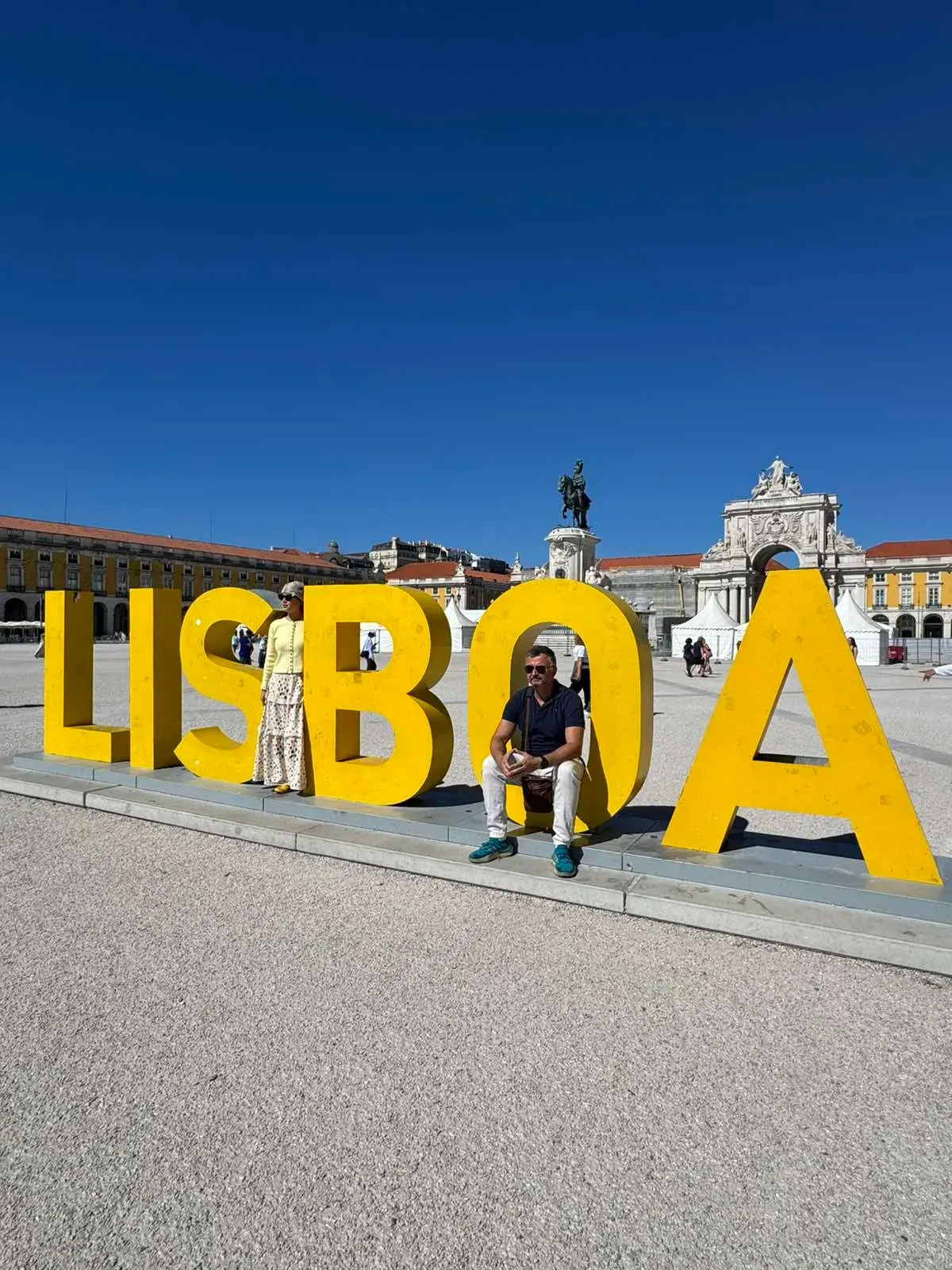
At kilometre sixteen a family stood at the side of the road with a speaker. As we came level they pressed play. It was the music from Rocky, the one where he runs up the steps. The ocean was beside us. We had twenty-six kilometres still to go. Our legs had not been fresh for a while. For a few minutes after that they were.
Before the start
We had come for the race, and we had a few days on either side of it.
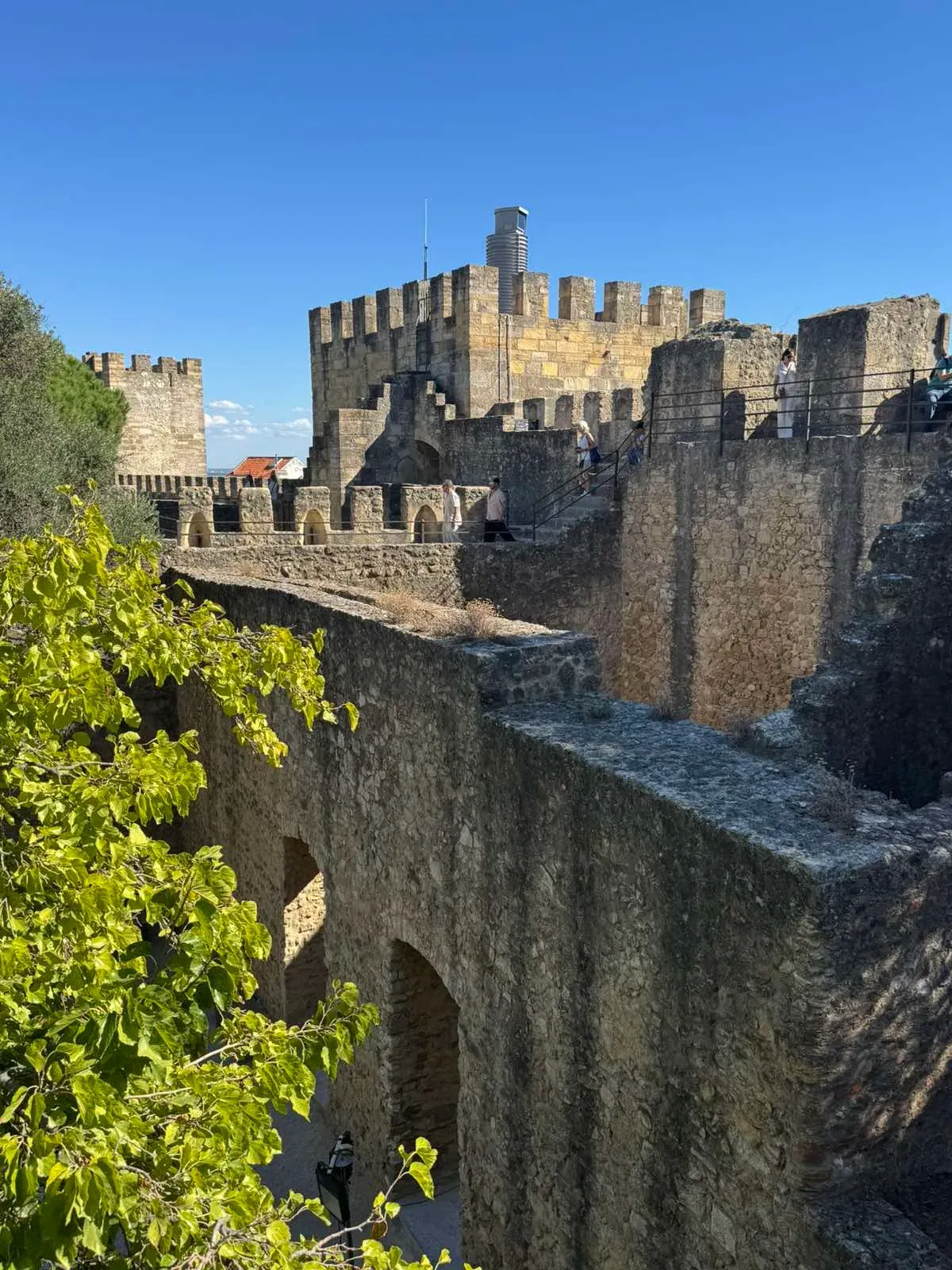
Lisbon is old and does not hide it. You turn a corner and there is a castle. You take a tram and there is a monastery. São Jorge Castle sits on the hill above the old town. The walls are old and the trees are young, and in the heat we walked from one patch of shade to the next.
At Belém the stone turns to lace. In the cloister of Jerónimos Monastery the arches are carved so finely you forget they are stone. Down by the water Belém Tower has stood guard over the river for five hundred years. From the top you look out to where the river becomes the sea.
Walk east along the river and the old city turns new. White roofs curve over the water. People line up deckchairs on the promenade and turn their faces to the sun. Further on, Parque das Nações looks like another country.
The parks are green and well kept, and the castles are easy to get round. When the sun is hot the trees and the river do most of the work.
The pastry shops do the rest. There is a pastel de nata on every corner, and every café swears by its own recipe. In the shops and cafés people switched to English without being asked, and often to Spanish as well.
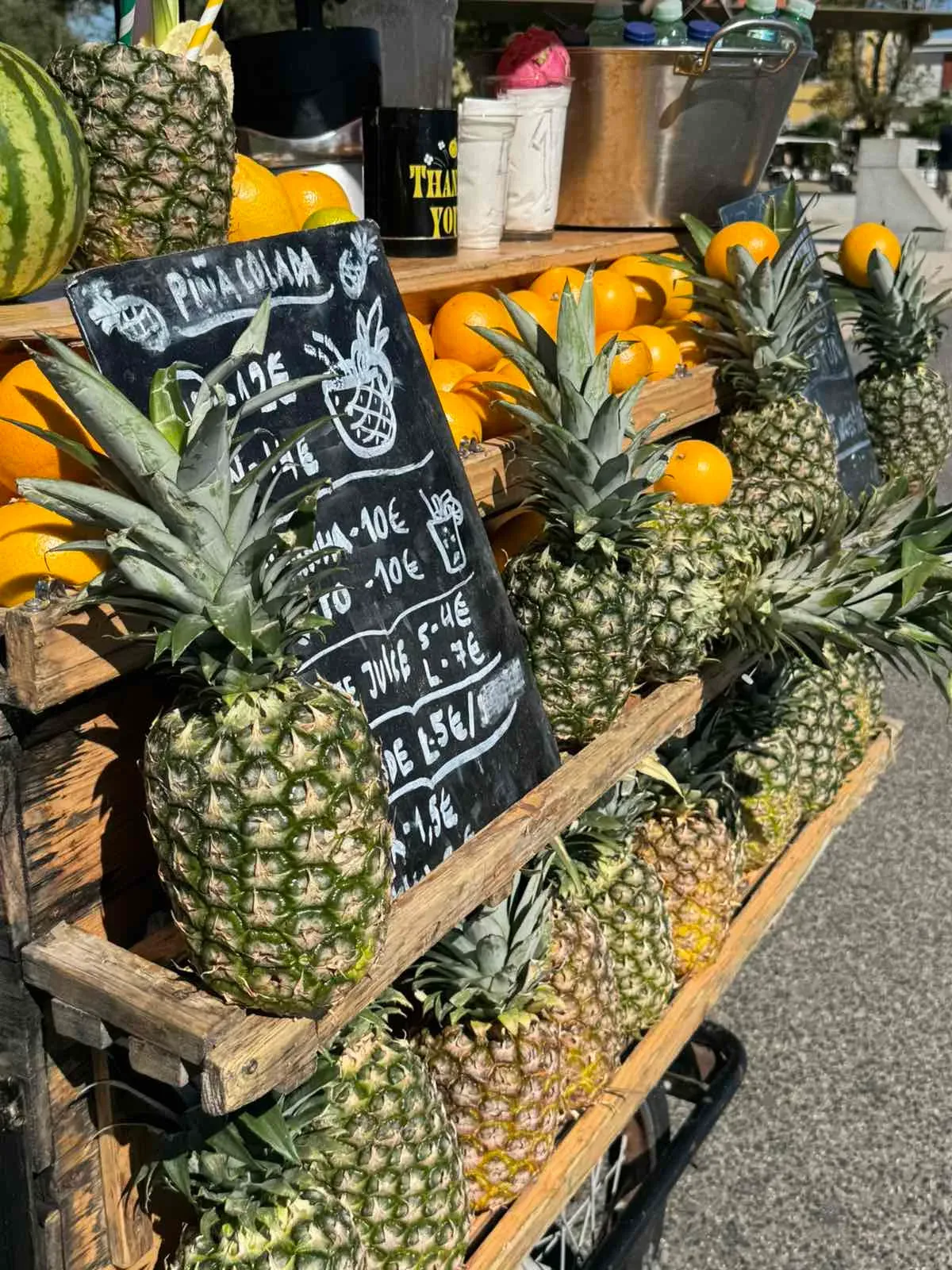
The souvenir shops have two gods. One is the sardine. It comes in painted tins stacked by year, so you can look for the one you were born in. The other is Cristiano Ronaldo, on shirts, on posters, over shop doors. Nobody has yet put them together. Sardino Ronaldo, his face on the tin. It would sell itself.
The race
The start was in Carcavelos, by the ocean, early on Saturday morning. Cascais, the town along the coast, is beautiful, and it would be a good place to stay.
For the first thirteen kilometres the course wanders. Then it comes back to the shore, and from there to the finish the big water is always beside you: first the Atlantic, then the wide mouth of the Tagus, then the river.
The people came out for all of it. They stood in the villages and on the corners and clapped for strangers.
On stages along the road rock bands played. Between them came Portuguese music.
The sun climbed. At the drink stations there was water. At the next one there was water too.
In forty-two kilometres we found two stations with isotonic drinks. We did not see a banana all day. In that heat water keeps you going, but it does not give you anything back.
At kilometre twenty-six the road climbed one last time.
It was the last hard climb. After it there was nothing left to fight but the distance.
We just ran and looked. The river. The bridge. The boats. Belém going by on the left.
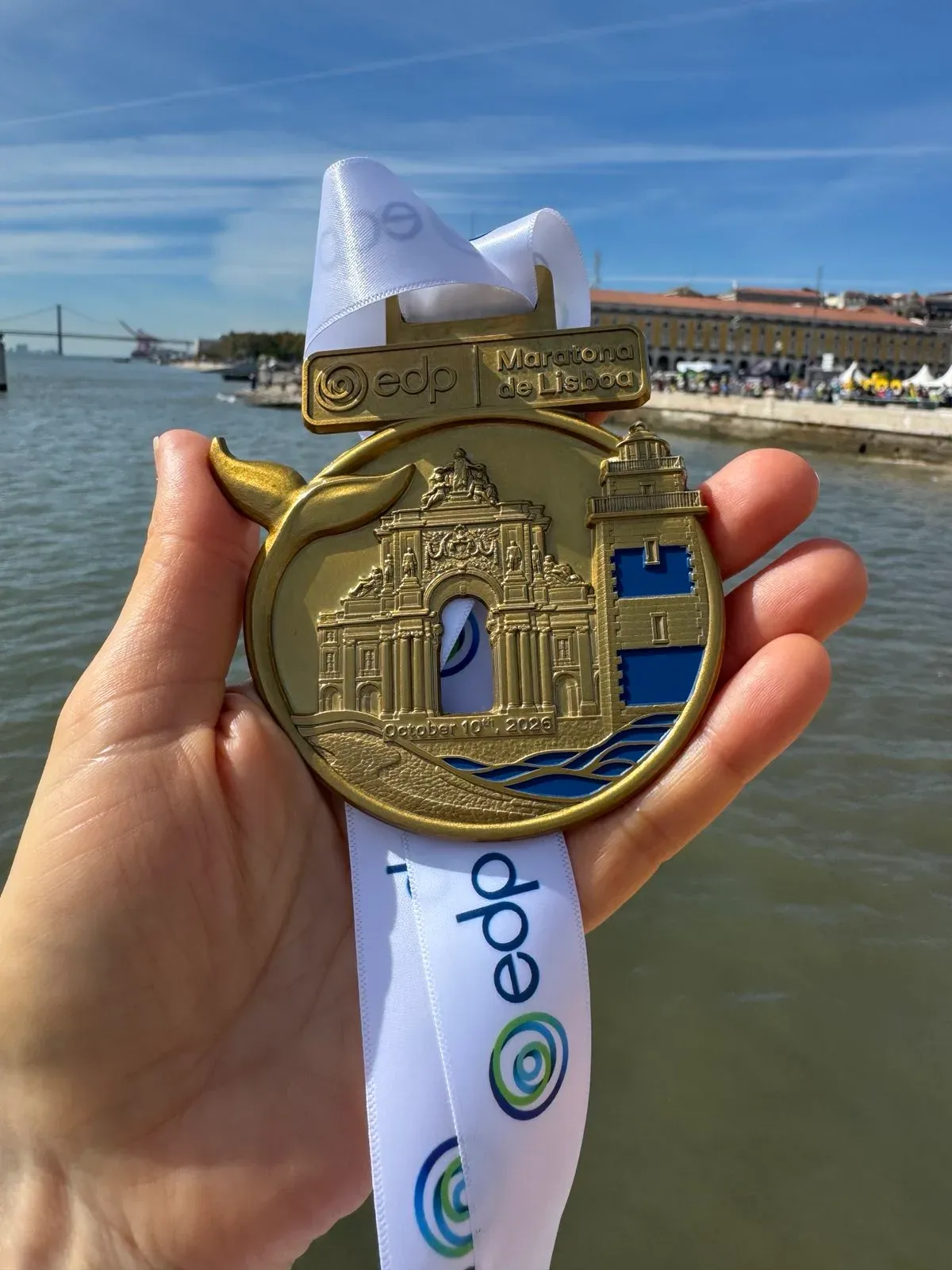
The finish was in Praça do Comércio, the great square on the river. They put a medal round our necks.
Later we took it down to the river and held it up to the light.
If you go
The Lisboa Card
Buy it. You see the advert as soon as you land, in the arrivals hall, and it is the best advice you will get. The card gives free travel on the metro, buses, trams and the city’s lifts, including the metro from the airport. It covers the CP trains to Sintra, to Cascais and to the south bank of the Tagus. And it gets you into more than fifty places free, among them Jerónimos Monastery, Belém Tower and São Jorge Castle.
It comes for 24, 48 or 72 hours, from €31, and starts on first use. Belém Tower and Jerónimos need a time slot, which you can book only once you have the physical card. Pena Palace in Sintra is not included; there is a combined card with Pena from €58. Pena is worth it: red, yellow and grey, all at once, on top of a green hill.
Getting around
Uber in Lisbon was cheap, and so was car hire, if you want to see more of the country. In the city you do not need a car. The hills are steep and the trams are old, and the card pays for them.
Running the Lisbon Marathon
- Take the train to the start. Trains, buses and the metro are free for runners on race day, and Carcavelos station is about a kilometre from the start.
- Carry your own fuel. We found only two isotonic stations and no bananas. Gels and salt tablets will save your last ten kilometres.
- Save something for kilometre 26. That is the last hard climb. After it the course is yours.
- Respect the heat. October in Lisbon can be warm. Start slower than you want to.
- Stay a few days. The finish is in the most beautiful square in the city. Don’t fly home the same evening.
Obrigado, Portugal.
The short version
- The EDP Lisbon Marathon ran on Saturday 10 October 2026, from Carcavelos to Praça do Comércio. From about kilometre 13 the course stays by the water to the finish; the last hard climb comes around kilometre 26. The cut-off is six hours.
- Spectators cheered along the whole course, with rock bands and local music on stages. But on a hot day we found only two stations with isotonic drinks, mostly water, and no bananas anywhere.
- On race day trains, buses and the metro are free for runners from 5:30 to 17:00. The CP train from Cais do Sodré takes you to the start.
- The Lisboa Card, from €31 for 24 hours, covers the metro, buses, trams, the CP trains to Sintra and Cascais, and free entry to sights such as Jerónimos Monastery, Belém Tower and São Jorge Castle. Pena Palace needs the combined ticket.
- Uber and car hire were cheap. Most people we met spoke English, and many spoke Spanish too.
Sources
More on family travel
- Family holidays by train in Europe: what children pay, country by country
- Autumn school holidays 2026: the dates across Europe, and where to go with children
- By train to the first Wörthersee Marathon: a weekend from Vienna
- No internet in Torrevieja: what to do when EU roaming fails
- Running for wine: the Blaufränkischland Marathon in Burgenland
Comments
What do you think? No account needed. Please be kind; comments that attack people are removed.
No comments yet. Be the first.