AI Beat

Law

AI in legal practice, courts and law firms. What changes for lawyers, in plain English, with every source linked.

LawStrengthening the fight against online child sexual abuse with new tools and supportOpenAI announced new tools, guidance, and partnerships to prevent, detect, and respond to online child sexual exploitation and abuse.

Latest in Law

Today

TechLaw4h ago

Banks Have Had It Up to Here With Your AI Agent

Major US banks are prohibiting third-party AI agents from accessing customer accounts and are placing liability for any bot errors entirely on users. This represents a significant restriction on AI agent capabilities in the financial sector.

Why it matters: Users who rely on AI agents for financial management face new legal and practical obstacles, while financial institutions are signaling concerns about bot-driven errors and security risks.

SourceWired

Friday, November 20

LawPolicy2 days ago

Court Tells Cops That The 4th Amendment Doesn’t Cover AI-Generated ‘Probable Cause’

A court has ruled that the Fourth Amendment does not protect individuals against AI-generated probable cause used by law enforcement. The decision raises concerns about constitutional protections in an AI-assisted policing context.

Why it matters: This ruling creates a legal gap where AI systems can generate search warrants without traditional Fourth Amendment safeguards, potentially enabling broader police authority to investigate citizens based on algorithmic decisions.

SourceAbove the Law

Thursday, November 19

LawPolicy4 days ago

Black high school students sue after AI mistakes Doritos bag for gun

High school students filed a lawsuit after being detained and searched based on an AI system that incorrectly identified a bag of snacks as a firearm. The misidentification and resulting wrongful detention raises questions about the use and accuracy of AI in law enforcement.

Why it matters: This case highlights the real-world consequences when AI systems make critical errors in public safety situations, potentially leading to civil rights violations and wrongful detention of young people.

SourceHacker News

Wednesday, November 18

LawPolicy4 days ago

More banks says customers using AI agents are on their own — even if they get hacked

Major financial institutions including Citi are restricting personal finance AI agents and limiting liability for customers who experience fraud or hacking while using these tools.

Why it matters: Banks declining to support AI-driven personal finance tools highlights regulatory and liability concerns that could slow adoption of autonomous financial agents and shift risk to consumers.

SourceTechCrunch

LawHealth4 days ago

STAT+: Epic defends competitive practices; promises AI access to records

Epic Systems has committed to providing AI access to patient health records while defending its competitive practices against regulatory scrutiny. The commitment addresses concerns about how AI tools interact with electronic health record systems.

Why it matters: Epic's pledge to open AI access to records could improve how AI tools assist healthcare providers, but the company's defense of its broader competitive tactics suggests ongoing tensions over data access and market dominance in EHR software.

SourceSTAT News

Law4 days ago

How AI is Changing Case Research for Corporate Restructuring

AI tools are being applied to accelerate case research and document analysis in corporate restructuring and Chapter 11 bankruptcy proceedings, where speed and comprehensive analysis are critical.

Why it matters: AI-assisted legal research could help lawyers respond faster to tight deadlines in complex restructuring cases, potentially improving outcomes for creditors and stakeholders.

SourceLawSites (LawNext)

Tuesday, November 17

TechLaw5 days ago

Introducing GPT-6.2 Astra and Sol

OpenAI released GPT-6.2 Astra and Sol, emphasizing improvements in professional outputs, coding, computer use, and cost efficiency. The models are available through ChatGPT Work, Codex, and the API.

Why it matters: Updated flagship models with better coding and automation capabilities strengthen OpenAI's position in professional and enterprise markets.

2 sourcesOpenAIvia Techmeme

TechLaw6 days ago

OpenAI Opens Astra for Law to All ChatGPT Enterprise Customers and Releases New Benchmark Results

OpenAI expanded access to Astra for Law, its specialized legal version of GPT-6, to all ChatGPT Enterprise customers beyond the initial trusted access program, and released new benchmark results.

Why it matters: Broader availability of specialized legal AI tools could help law firms of all sizes access advanced research and analysis capabilities, potentially changing how legal work is performed.

2 sourcesOpenAILawSites (LawNext)

TechLaw5 days ago

AAA Expands Its AI Arbitrator to Handle A Variety of Business-to-Business Disputes

The American Arbitration Association has expanded its AI Arbitrator tool beyond construction disputes to handle a broader range of documents-only business-to-business disputes across industries. A year after its initial launch, the platform is now available for wider commercial use.

Why it matters: Expanding AI arbitration tools to multiple industries could reduce dispute resolution costs and timelines, though questions remain about fairness and legal accountability.

SourceLawSites (LawNext)

TechLaw5 days ago

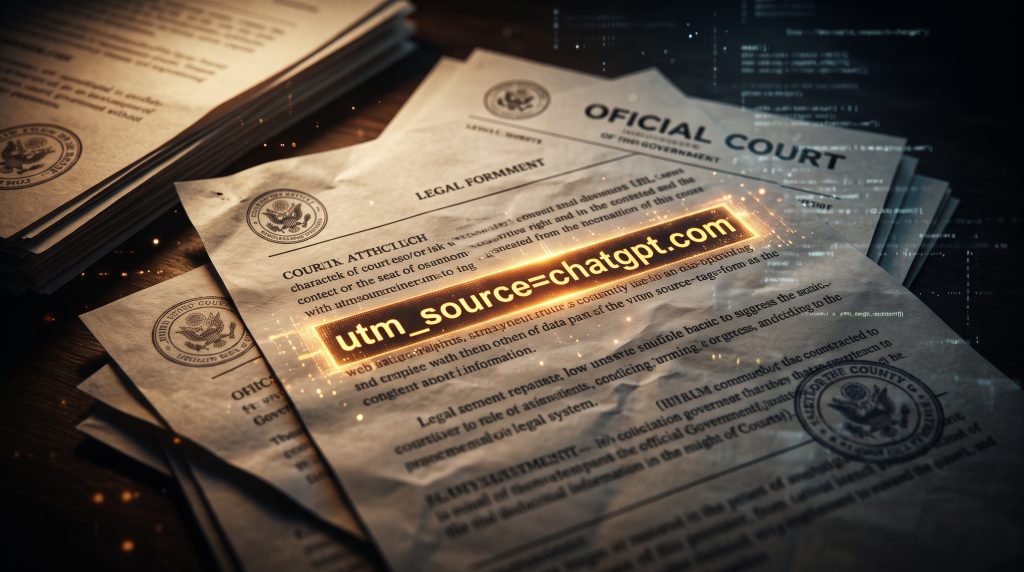
Study Finds ChatGPT Tracking Tag in 298 Federal Court Cases and 133 SEC Filings

A study found OpenAI's ChatGPT tracking tag (utm_source=chatgpt.com) embedded in 298 federal court cases, 133 SEC filings, and numerous government and academic documents. Users can manually remove the tag.

Why it matters: The widespread presence of tracking tags in sensitive legal and regulatory documents raises questions about data collection and privacy in professional settings.

SourceLawSites (LawNext)

TechLaw5 days ago

Thanks To AI, Baker McKenzie Wants To Break Up With The Billable Hour

Law firm Baker McKenzie is exploring value-based billing models powered by AI as an alternative to traditional hourly billing. The shift could become more common in legal services, though hourly billing is not disappearing entirely.

Why it matters: AI-driven value billing could reshape how law firms charge clients and compensate lawyers, creating pressure for outcome-focused legal work but also raising questions about access for cost-conscious clients.

SourceAbove the Law

Monday, November 16

TechLaw6 days ago

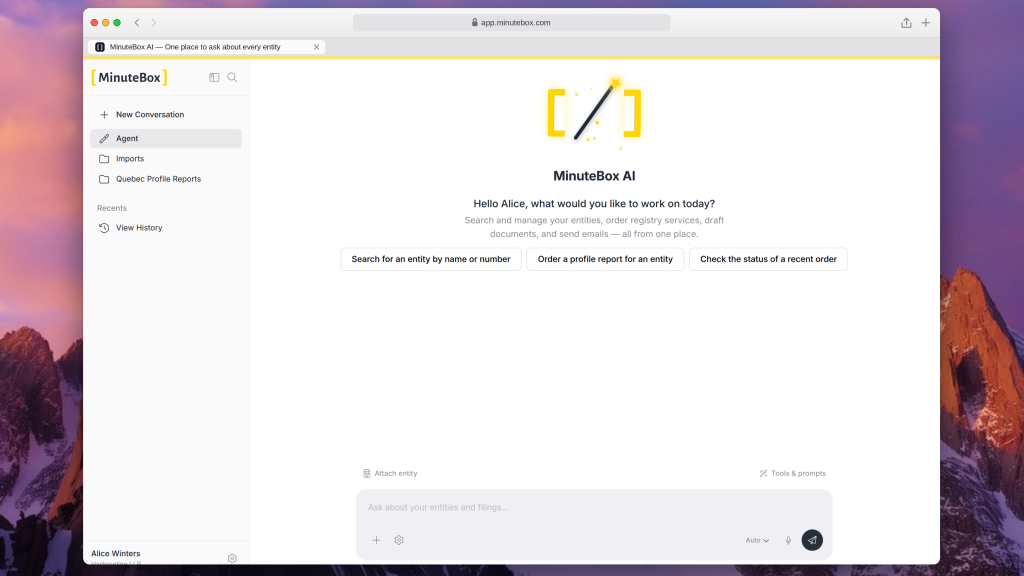
Exclusive: MinuteBox Launches AI Agent to Turn Its Entity Management Database Into a ‘System of Work’

MinuteBox, a corporate records management company, has launched an AI agent that allows legal professionals to query its entity database using natural language to perform legal work tasks. The company describes this as a fundamental reshaping of its product into a platform for legal operations.

Why it matters: This demonstrates how AI agents can streamline routine legal work by making corporate databases more accessible to law professionals without requiring technical queries.

SourceLawSites (LawNext)

Thursday, November 12

EducationLaw10 days ago

The Next Generation Of Law Students Don’t Trust AI Hype

A research report shows that law students use AI as a research tool but remain skeptical of AI for drafting and automation tasks that law firms are increasingly adopting.

Why it matters: The gap between student trust in AI and law firm investment in AI automation could create friction as the next generation of lawyers enters the profession with different expectations about AI reliability.

SourceAbove the Law

Wednesday, November 11

TechLaw11 days ago

Claren Launches ‘Envoys’ Inhouse Agents

Claren has launched Envoys, AI agents designed to handle routine inhouse legal tasks by integrating with email and Slack. The always-on agents automate matter management and administrative work for law firms.

Why it matters: Law firms can reduce time spent on repetitive administrative tasks, freeing lawyers to focus on higher-value client work and strategy.

SourceArtificial Lawyer

Tuesday, November 10

LawPolicy12 days ago

OpenAI, Anthropic face new oversight as New York’s AI safety law takes effect

New York is implementing its AI safety law, requiring major AI developers including OpenAI and Anthropic to register with regulators, disclose their safety practices, and report critical incidents or face penalties.

Why it matters: This enforcement creates concrete legal obligations for AI companies to demonstrate responsible practices, setting a precedent for how states can regulate powerful AI systems before federal rules take effect.

2 sourcesPoliticoTechCrunch

TechLaw12 days ago

Tax Research Platform Blue J Raises $176M to Expand Its Agentic AI and Reach New Markets

Blue J, a Toronto-based tax research platform, raised $176 million in Series E funding led by JMI Equity to scale its agentic AI capabilities and expand into new markets. The company uses AI agents to assist with tax research and advisory services.

Why it matters: Significant investment in agentic AI for professional services shows how enterprises are deploying AI agents in specialized fields like tax and legal work to improve research and advisory capabilities.

SourceLawSites (LawNext)

TechLaw12 days ago

Lawsuit filing: Point72's quant unit Cubist claims its fired lead research analyst used Claude and Codex to steal source code before leaving for a competitor (Bloomberg)

Cubist, the quant unit of Point72 Asset Management, filed a lawsuit alleging that a former lead research analyst used Claude and Codex to steal proprietary source code before departing for a competitor. The case highlights concerns about AI tools facilitating intellectual property theft.

Why it matters: The lawsuit raises questions about whether AI models can be misused to exfiltrate proprietary code and underscores corporate security risks when employees have access to powerful coding AI tools.

Sourcevia Techmeme

TechLaw12 days ago

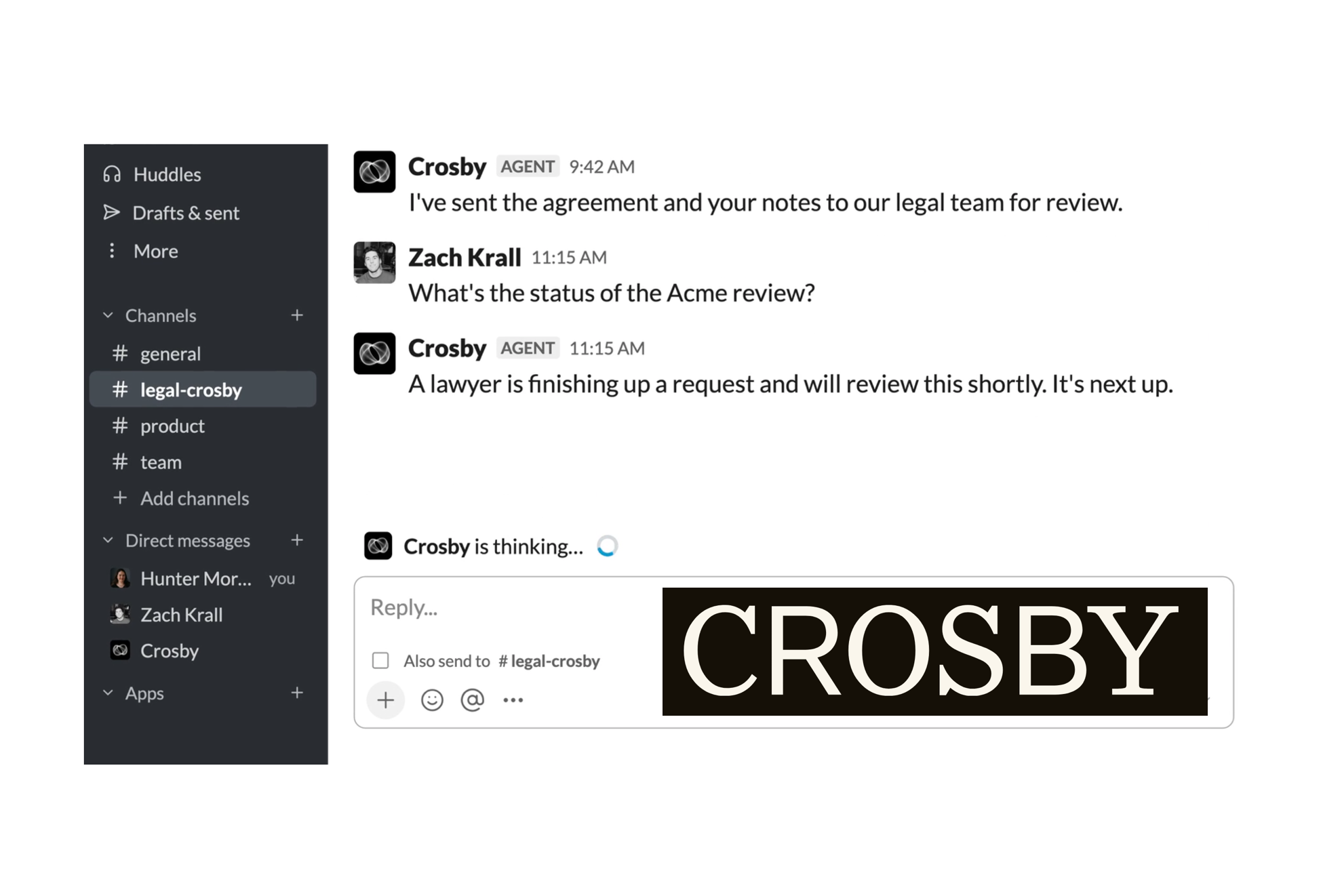
Crosby Insures Paralegal Agents – Interview

Crosby, an AI-native law firm, has launched paralegal agents designed to continue working autonomously on client matters. The firm is positioning itself around agentic AI capabilities for legal work.

Why it matters: Autonomous legal agents could reduce the cost and timeline of routine legal work, making legal services more accessible to a broader range of clients.

SourceArtificial Lawyer

LawPolicy12 days ago

AI Can (Mostly) Solve Cyber Regulatory Harmonization and Efficiency

An article argues that AI can help solve inefficiencies in cyber regulatory compliance across jurisdictions. The piece suggests AI-driven compliance tools could reduce fragmentation in regulatory requirements.

Why it matters: AI solutions for regulatory harmonization could streamline compliance costs for businesses operating across multiple jurisdictions and reduce administrative burden.

SourceLawfare

Monday, November 9

TechLawPolicy13 days ago

US federal prosecutors say businesses have lost $129M+ to scam calls using AI-generated voices to mimic company executives in the 18 months since July 2024

Federal prosecutors report that a federal indictment names three men who used AI-generated voice technology to impersonate company executives and attorneys in fraud schemes. Over 18 months since July 2024, businesses lost more than $129 million to such scams.

Why it matters: Rising AI-enabled fraud targeting executives demonstrates the need for stronger defenses against voice synthesis misuse and highlights emerging cybercriminal tactics.

Sourcevia Techmeme

Law13 days ago

For Access To Justice, The Perfect Lawyer Is The Enemy Of The Good Chatbot

An opinion piece argues that AI chatbots have a practical role in addressing the access to justice crisis, even if they are not perfect solutions. The author suggests that adequate AI assistance is preferable to no assistance for people unable to afford lawyers.

Why it matters: AI-powered legal tools could help bridge the gap for people who cannot afford traditional legal representation.

SourceAbove the Law

Sunday, November 8

TechLaw14 days ago

Goldman Sachs Is Pulling Claude Code from Its Bankers and Traders

Goldman Sachs has removed Claude Code access from its bankers and traders, signaling concerns about data sharing and privacy with the AI tool. The move reflects broader enterprise caution about integrating AI assistants into sensitive financial workflows.

Why it matters: Major financial institutions restricting AI tool use signals that companies are reassessing risks of data exposure and privacy breaches when deploying third-party AI systems.

SourceHacker News

TechLaw14 days ago

Elvis and Eminem rights holders are suing Suno

Music rights holders for Elvis Presley and publisher representatives for Eminem are suing Suno, an AI music generation company, alleging it illegally creates music that mimics those artists.

Why it matters: This case tests whether AI music tools can be held liable for copyright infringement when trained on existing recordings, with implications for how AI companies can legally use copyrighted material.

SourceThe Verge