Half the people on the call thought it was human. It wasn’t
A start-up called Tavus says its new video model fooled 48% of people in a one-minute call. The same week, Ideogram released an image editor that can change a photo again and again without leaving a trace. What we see on a screen is getting harder to trust.
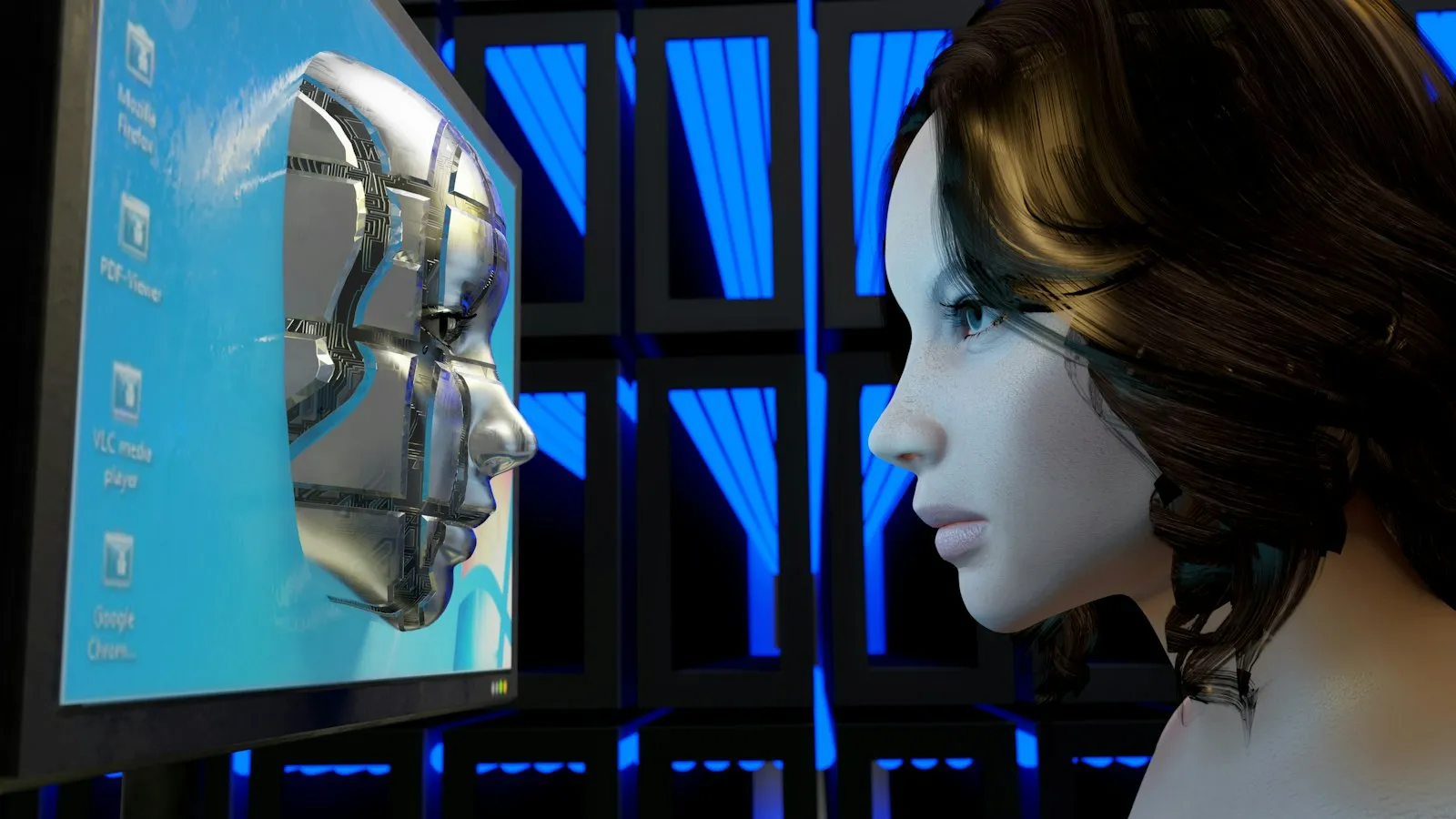
Key points
- Tavus says 26 of 54 people who spoke to its Griffin-Lite model on a one-minute live video call thought it was a real person. Its earlier system fooled 1 in 41.
- Griffin listens and reacts while you speak: to your face, your pauses, your interruptions. Tavus calls it a Human Interaction Model.
- It is not for sale. Tavus says it is a research preview for trusted testers because it can be mistaken for a person.
- Ideogram 4.5, out on 30 September, lets you edit the same image many times without the colour and texture drift older tools leave. Open weights are promised, not yet released.
- The test was small and short, and both companies published their own results. But the direction is clear. Agree a family code word, and call back on a number you know.
The call lasts one minute. A face on the screen smiles, listens, cuts in when you hesitate. Then you are asked a question: was that a person?
Twenty-six people out of fifty-four said yes. It was not a person. It was Griffin-Lite, a model made by a San Francisco start-up called Tavus, which announced it on 1 October.
What Tavus built
Most AI video is a puppet. You speak, it waits, it answers. Griffin works differently, Tavus says. It sees and hears and talks at the same time. It reacts to your expression, your pauses, the moment you start to interrupt. Tavus calls it a Human Interaction Model.
In its own study, people had a one-minute live video call and then said whether they thought they had talked to a human. With Griffin-Lite, 48% did. With the company’s previous system, 2.4% did: one person out of forty-one. Those who believed it was human were, on average, 79% sure.
Share of people who thought the AI on the video call was a real person
One-minute live video calls in Tavus’s own study: 54 calls with Griffin-Lite, 41 with Tavus’s previous system.
Source: Tavus
Tavus calls this the first pass of a video Turing test. Alan Turing’s idea was simple: if you cannot tell the machine from a person in conversation, the machine has done something real. There is no official pass mark. And this test was small, short, and run by the company that made the model. Nobody has checked it yet.
Still, a jump from one in forty to one in two is not a rounding error.
Not for sale, for now
You cannot use Griffin. Tavus says it is a research preview for a few trusted testers, held back because it can be mistaken for a person. That is honest. It is also a warning. Others will build the same thing, and not all of them will hold back.
Pictures you can change without a trace
The same week brought a quieter release. Ideogram 4.5, out on 30 September, is an image editor built to change one thing at a time. Swap a chair, relight a room, fix the text on a label, then do it again, and again. Older tools drift as you go: the colours shift, the skin goes waxy, the picture slowly stops being the same picture. Ideogram says its model does not.
It is on Ideogram’s site, in its API and in apps such as Picsart, Krea, Runway and Gamma, for between $0.008 and $0.22 an image. The company says it will publish the model’s weights, so anyone could run it. It has not done so yet. Its comparisons with rival editors are its own, not an independent test.
For designers and shops this is useful. A product shot in ten colours. An old family photo restored. But it also means a photo can be changed many times and still look untouched.
What it means for you
A face on a call and a photo in a chat used to be proof. They are becoming claims. Fraudsters already use cloned voices and faked video to ask for money. The FBI’s advice is plain:
- Agree a secret word or phrase with your family and use it when a call feels wrong.
- Hang up and call back on a number you already know, not the one that called you.
- Listen to the words, not only the voice. Would your daughter really say that?
- Look for small faults: odd hands, teeth or eyes. They are getting rarer, so don’t rely on them alone.
- Keep your face and voice off public profiles where you can.
At work, the rule is the same. A video call is not a signature. Money moves only after a second check, through a channel you trust.
The machines are getting better at looking like us. We will have to get better at checking.
Comments
What do you think? No account needed. Please be kind; comments that attack people are removed.
No comments yet. Be the first.